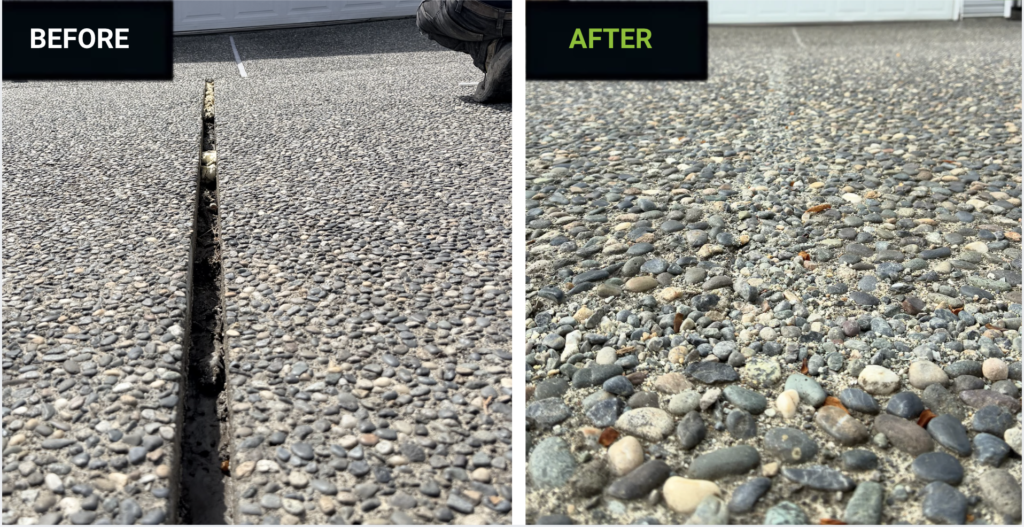
Concrete cracks are common — but not all cracks are cosmetic.
What starts as a small concrete crack can quickly become a bigger problem — especially when the underlying cause is ignored. Many do-it-yourself crack repair products only provide a temporary surface fix, often leading to visible discolouration, poor adhesion, or cracks that reopen after heavy rain, freeze-thaw cycles, or continued soil movement.
Wide cracks in concrete are often signs of underlying soil movement, settlement, moisture changes, or slab shifting beneath the surface. While patching and sealing cracks can improve appearance and help protect the surface, it’s important to understand that crack repair alone does not restore structural stability or address why the crack formed in the first place.
While it might be tempting to tackle concrete cracks yourself, crack repair is about much more than filling a gap. Proper preparation, specialized materials, and understanding why the concrete cracked in the first place all play a critical role in creating a long-lasting repair. That’s why this is a job best left to experienced professionals.
We believe the best repair starts with understanding the cause.
Before Repairing Concrete Cracks
Before repairing any large crack, it’s important to assess the condition of the surrounding concrete and look for signs of movement or settlement.
Things to pay attention to include:
- The location of the crack
- The width and depth of the crack
- Whether one side of the slab has sunk or shifted
- The direction the crack is traveling
- Whether the crack has grown over time
- Signs of water drainage issues or soil erosion nearby
Cracks can sometimes indicate a larger structural or soil-related issue — especially when combined with sinking concrete, uneven slabs, or movement around the home.
Signs a Crack May Be More Than Cosmetic
Some cracks should be professionally evaluated before simply patching them over.
Potential warning signs include:
- Cracks wider than ½ inch
- Uneven concrete or vertical displacement
- Cracks in foundation walls or structural slabs
- Expanding or recurring cracks
- Interior signs such as sticking doors, sloping floors, or drywall cracking
- Settlement around driveways, patios, sidewalks, or garage slabs
In these cases, stabilizing the underlying soil or slab may be necessary before cosmetic repair is performed.
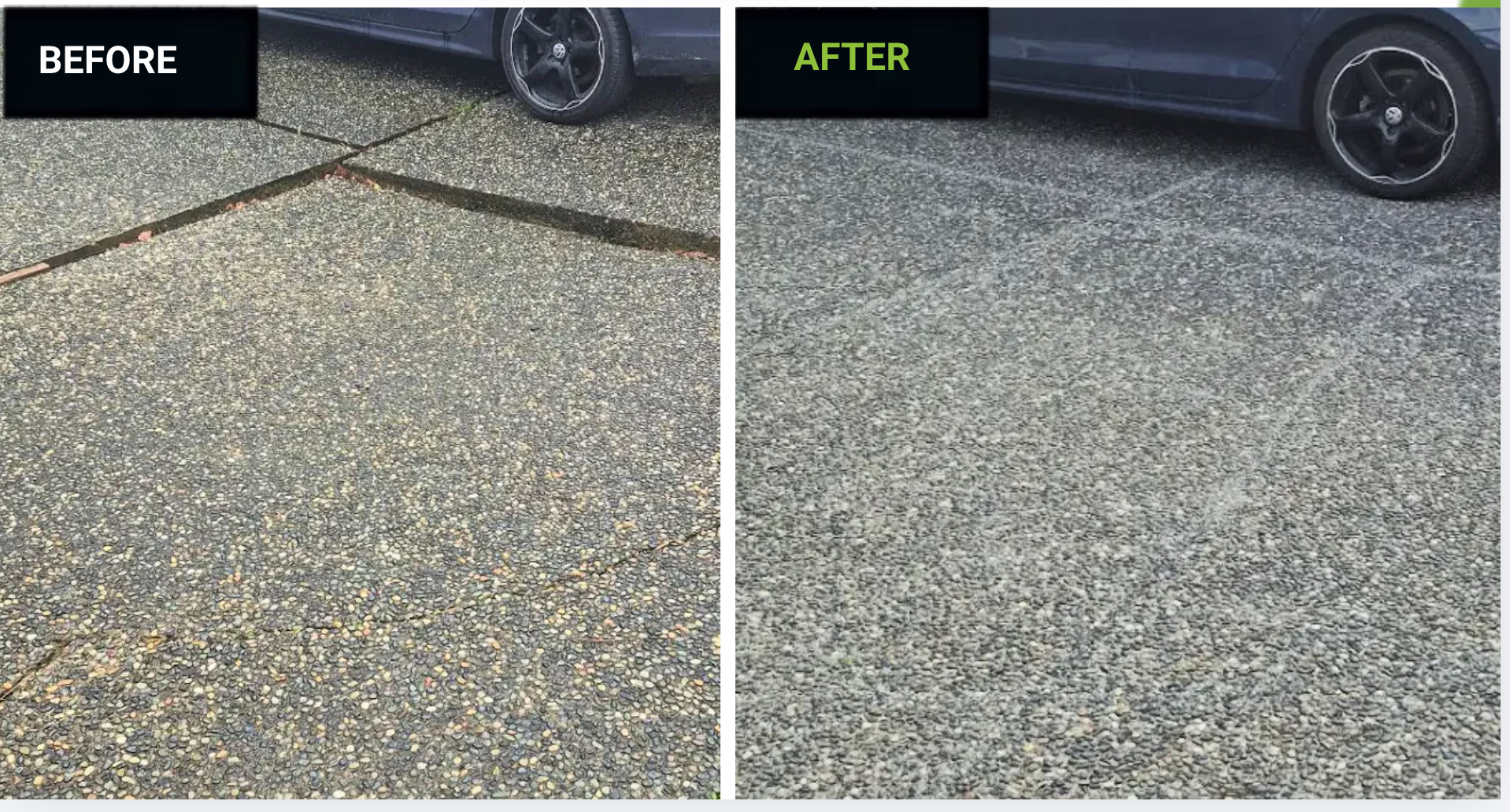
How to Repair Wide Cracks in Concrete
Wide concrete cracks are typically repaired using a concrete patching compound or structural repair material designed to fill and seal larger voids.
For the best results:
1. Remove Loose Material
Use a hammer and chisel or grinder to remove loose, weak, or deteriorated concrete from the crack.
Opening the crack slightly into a “V” shape helps the repair material bond more effectively.
2. Clean the Area Thoroughly
Remove all dust, debris, loose sand, and moisture from the crack.
A clean surface is critical for proper adhesion.
3. Apply the Repair Material
Use a concrete patching compound suitable for exterior concrete repair.
Work the material deep into the crack using a trowel to eliminate air pockets and ensure proper filling.
4. Smooth and Blend the Surface
Feather and smooth the repair material to blend with the surrounding concrete surface as naturally as possible.
Keep in mind:
Fresh repair material will typically appear newer and cleaner than the existing concrete. Over time, weathering and exposure help the repair blend more naturally.
5. Seal and Protect the Surface
Once cured, applying a concrete sealant can help protect the repair from moisture intrusion, freeze-thaw damage, and surface deterioration.
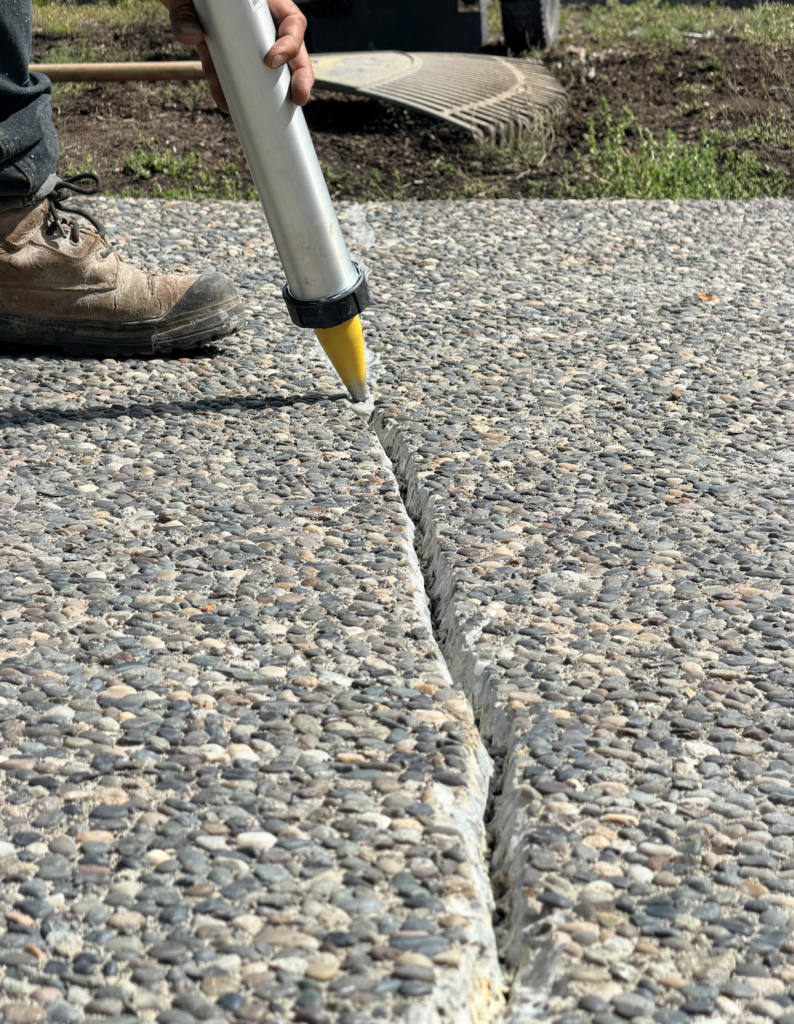
How to Repair Narrow Concrete Cracks
Smaller cracks — typically less than ¼ inch wide — can often be repaired using a flexible concrete crack sealant or masonry crack filler.
For deeper narrow cracks:
- Insert a foam backer rod into the crack first
- Apply the sealant using a caulking gun
- Smooth the surface to ensure proper adhesion and appearance
Flexible sealants help accommodate minor expansion and contraction caused by temperature and moisture changes.
Repairing the Cause — Not Just the Crack
At True Level Concrete, we take a different approach to concrete repair.
While surface crack repair has its place, simply patching over a crack without addressing underlying movement often leads to the crack returning — sometimes in the same spot, or somewhere nearby.
In many cases, the real issue is:
- Soil settlement
- Void formation beneath the slab
- Water erosion
- Improper drainage
- Freeze-thaw movement
- Structural instability
That’s why we often combine crack repair with stabilization solutions such as slab lifting, void filling, joint sealing, or structural support systems when needed.
Our goal is not just to improve appearance — but to help extend the life, safety, and stability of the concrete itself.
If you’re noticing large cracks, sinking concrete, or recurring movement around your home, our team can provide a professional assessment and repair plan based on the actual condition of the concrete and underlying soil.