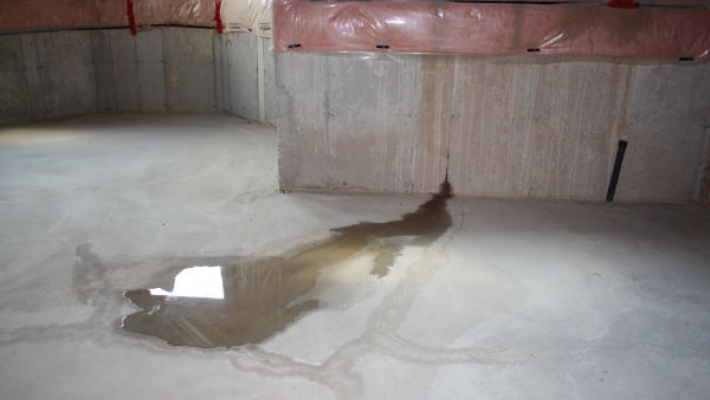
If you’ve discovered water in your basement after a heavy rainfall, you’re not alone. Basement leaks are one of the most common issues homeowners face throughout Metro Vancouver and the Fraser Valley.
The question most people ask is:
“Why is my basement leaking?”
The short answer is that water almost never enters a basement without a reason. In most cases, the leak is simply revealing an underlying problem with your home’s drainage, foundation, or the soil surrounding it.
At True Level Concrete, we’ve assessed thousands of homes across the Lower Mainland, and while every property is unique, the causes of basement leaks are remarkably consistent.
Vancouver’s Climate Creates the Perfect Conditions
Living on the West Coast means dealing with long periods of rain. During the fall and winter months, the soil around your home becomes saturated with water. As the ground fills with moisture, pressure builds against your foundation walls.
This is known as hydrostatic pressure.
Concrete may look solid, but it’s naturally porous. Over time, enough pressure can force water through tiny cracks, construction joints, pipe penetrations, or other weak points in the foundation.
However, hydrostatic pressure is only part of the story.
Water Finds the Weakest Point
Water doesn’t create the problem—it exposes it.
If your foundation has shifted, settled, cracked, or developed gaps over time, rainwater will almost always find those openings. That’s why simply sealing the visible leak doesn’t necessarily solve the issue.
The more important question becomes:
Why did the crack or opening develop in the first place?
The Most Common Causes of Basement Leaks in Vancouver
Several factors can contribute to water entering your basement, including:
- Poor drainage that allows water to collect beside the foundation instead of flowing away from the home.
- Hydrostatic pressure from saturated soil pushing water through cracks or joints.
- Foundation settlement, which creates new pathways for water as the home moves over time.
- Foundation wall cracks caused by soil movement, seasonal moisture changes, or structural stress.
- Poorly sealed basement windows that allow rainwater to enter around aging frames.
- Plumbing leaks that can mimic foundation leaks and should always be ruled out first.
Often, it’s not just one issue but a combination of several factors working together.
Basement Leaks Are Often a Symptom, Not the Root Problem
One of the biggest misconceptions homeowners have is believing the visible leak is the actual problem.
In reality, it’s often the symptom.
A basement leak may be your home’s way of telling you that the foundation is moving, drainage has failed, or water pressure around the structure has reached a level it wasn’t designed to handle.
That’s why professional assessments focus on identifying why the leak occurred—not simply how to stop the water today.
Why Identifying the Cause Matters
Temporary repairs like crack injections, waterproof coatings, or sealants can help in certain situations. But if the underlying cause is foundation movement or poor drainage, the leak will often return.
The goal isn’t just to stop the water.
It’s to eliminate the conditions that allowed it to enter in the first place.
By understanding the source of the problem, homeowners can make informed decisions and avoid spending money on repairs that only address the symptoms instead of the cause.