Part 2: What Are the Tell-Tale Signs?
A door that sticks. A crack near a window. A floor that feels slightly off-level. Could these be signs your house is sinking?
In Part 1 of our series, we met Ian from True Level Concrete and introduced a home whose owners had reported cracking in the foundation and exterior walls, along with damage inside.
Part 2 explores the warning signs of foundation settlement—and why understanding them starts with looking at the whole home.
Cracks in walls and around openings
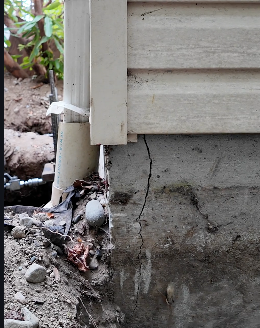
Cracks in drywall, particularly those extending from the corners of doors and windows, can be an indicator of foundation movement. Cracking in exterior masonry or the foundation itself can also warrant attention.
True Level includes drywall cracks among its settlement indicators. However, a crack alone does not establish that a home is sinking; an inspection helps determine what is causing it. Source: True Level Concrete, Signs of Settlement
Pay attention to where cracks appear and whether they change. Photos taken over time can provide a useful record to share during an assessment.
Doors and windows that no longer close properly
When a previously reliable door starts catching or a window becomes difficult to close, the frame’s alignment may have changed.
True Level identifies sticking doors and windows as possible signs of settlement. These everyday frustrations are worth mentioning during an inspection, especially when you are also noticing cracks or uneven floors. Source: True Level Concrete, Signs of Settlement
Sloping floors and new gaps
A noticeable slope in a floor can be another clue. Gaps between walls and ceilings, or around trim and window frames, may also accompany structural movement.
True Level’s foundation repair guide lists uneven floors, gaps, and misaligned doors and windows among the symptoms homeowners may notice. The important next step is to establish their cause through a professional assessment. Source: True Level Concrete, Foundation Repair: What You Need to Know
Why these changes can happen
The soil beneath a foundation provides support. If that soil shrinks, softens, or compresses, parts of the foundation may settle unevenly.
True Level identifies drying and shrinking soil, wetting and softening soil, and poorly compacted fill as common contributors to settlement. Which conditions apply to a particular home requires investigation. Source: True Level Concrete, What Causes Settlement
What should you do if you notice the signs?
Start by recording what you see: the location of cracks, doors or windows that have become difficult to operate, and areas where floors feel uneven. Include when you first noticed each issue and any changes since then.
Arrange a professional foundation assessment to understand whether the symptoms require monitoring or repair. Before patching visible damage, establish whether underlying movement needs to be addressed.
True Level’s blog explains that filling a crack may help seal an opening, but it does not necessarily stop the movement that caused it. Where settlement is ongoing, the repair needs to address that underlying issue. Source: True Level Concrete, Foundation Crack Repair: Why Simply Patching the Crack Often Isn’t Enough
Follow the series
Recognizing the warning signs gives homeowners a starting point for getting answers.
Watch Part 2 of “Your House Is Sinking. Is It Fixable?” and continue following the series as we explore the featured home’s condition and whether it can be repaired.
#FoundationRepair #FoundationSettlement #TrueLevel