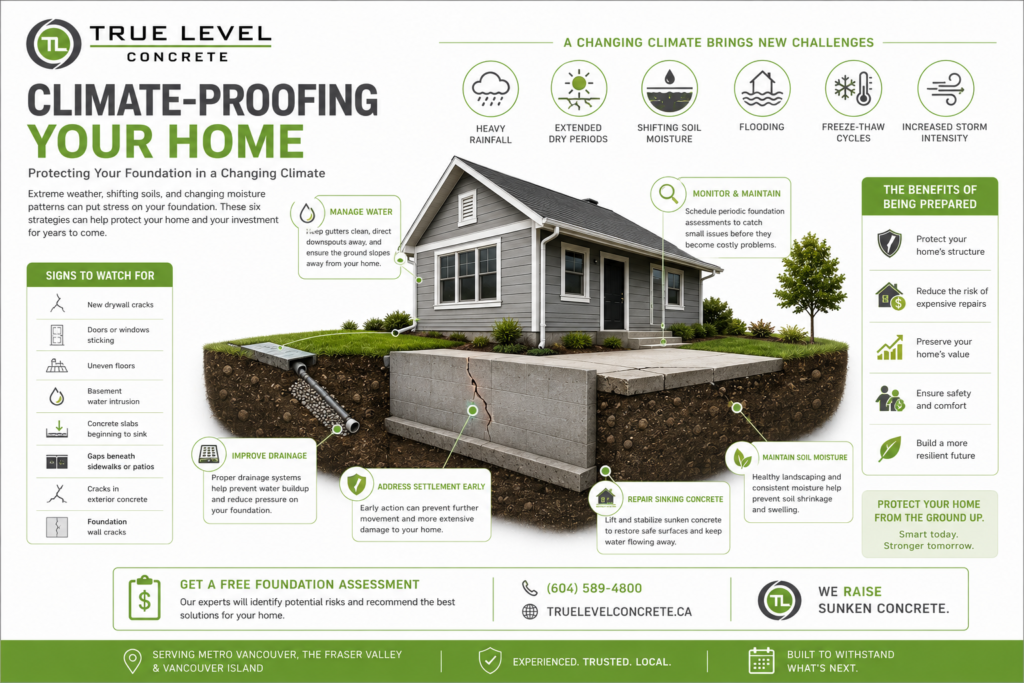
For decades, homeowners in British Columbia have planned around familiar weather patterns—wet winters, mild summers, and the occasional windstorm.
Today, those patterns are changing.
More intense rainfall, longer summer droughts, heat waves, atmospheric rivers, and freeze-thaw cycles are putting new stresses on homes across Metro Vancouver, the Fraser Valley, and Vancouver Island.
While most people think about protecting their roof or replacing old windows, one of the most important—and often overlooked—parts of climate-proofing a home is the foundation.
What Does Climate-Proofing Mean?
Climate-proofing means preparing your home to better withstand changing weather conditions and reducing the risk of costly damage before it occurs.
A resilient home is one that can handle:
- Heavy rainfall
- Extended dry periods
- Shifting soil moisture
- Flooding
- Freeze-thaw cycles
- Increased storm intensity
Your foundation supports your entire home, making it one of the first places these environmental changes can have an impact.
Why Climate Change Affects Foundations
Most foundation problems don’t begin with the concrete—they begin with the soil beneath it.
As weather patterns become more extreme, the ground around your home experiences greater fluctuations in moisture.
Heavy Rainfall
British Columbia has seen an increase in intense rain events and atmospheric rivers.
When soils become saturated, they can:
- Lose strength
- Wash away beneath concrete slabs
- Increase pressure against foundation walls
- Contribute to basement leaks
- Accelerate settlement in weak soils
Poor drainage compounds these problems by allowing water to collect around the foundation instead of moving safely away.
Extended Dry Weather
While heavy rain gets most of the attention, prolonged dry periods can also create problems.
Certain clay soils shrink as they dry, creating voids beneath foundations, sidewalks, patios, and driveways.
When moisture eventually returns, the soil expands again.
This continual cycle of shrinking and swelling places stress on foundations and can contribute to cracking and uneven settlement over time.
Signs Your Home May Be Responding to Climate Changes
Many homeowners first notice subtle warning signs such as:
- New drywall cracks
- Doors or windows sticking
- Uneven floors
- Basement water intrusion
- Concrete slabs beginning to sink
- Gaps beneath sidewalks or patios
- Cracks in exterior concrete
- Foundation wall cracks
These symptoms don’t always indicate a serious structural problem, but they can be early signs that changing soil conditions are affecting your home.
Six Ways to Climate-Proof Your Foundation
1. Keep Water Away From Your Foundation
Managing water is one of the most effective ways to protect your home.
Make sure:
- Gutters are clean and functioning properly.
- Downspouts discharge well away from the foundation.
- The ground slopes away from the house.
- Water isn’t pooling after heavy rain.
Keeping excess water away helps reduce hydrostatic pressure and minimizes soil erosion.
2. Improve Drainage
Drainage problems are one of the leading contributors to foundation movement.
Depending on your property, improvements may include:
- Surface drainage
- French drains
- Catch basins
- Perimeter drainage upgrades
- Proper grading
The right drainage solution depends on your home’s unique conditions.
3. Maintain Consistent Soil Moisture
During prolonged dry periods, large swings in soil moisture can contribute to movement in certain soil types.
Maintaining healthy landscaping and avoiding dramatic moisture changes around the home can help reduce stress on the surrounding soils.
4. Address Settlement Early
Small amounts of movement are common in many homes, but ongoing settlement shouldn’t be ignored.
Early intervention often allows problems to be addressed before they become larger, more disruptive, and more expensive.
Solutions may include foundation stabilization or lifting settled concrete before additional damage develops.
5. Repair Sinking Concrete
Climate-related soil movement doesn’t only affect foundations.
It also impacts:
- Sidewalks
- Driveways
- Patios
- Garage floors
- Pool decks
Repairing settled concrete helps restore safe walking surfaces while preventing water from collecting where it shouldn’t.
6. Schedule Periodic Foundation Assessments
Just as homeowners inspect their roof or HVAC system, periodically evaluating the condition of the foundation can identify developing issues before significant damage occurs.
An assessment can determine whether visible movement is cosmetic, historic, or an indication of ongoing structural settlement.
Climate-Proofing Isn’t About Fear—It’s About Preparation
The goal isn’t to expect the worst.
It’s to make informed decisions that help your home perform well for decades to come.
Many climate-related foundation issues develop slowly over several years. Addressing drainage, monitoring movement, and repairing problems early can significantly reduce future repair costs while helping preserve your home’s value.
Protecting Your Home Starts From the Ground Up
Climate-proofing isn’t just about stronger roofs or better insulation.
It also means understanding how changing weather affects the ground beneath your home.
By managing water effectively, maintaining proper drainage, and responding early to signs of settlement, homeowners can improve their home’s resilience and reduce the likelihood of costly structural repairs.
As British Columbia’s climate continues to evolve, investing in your home’s foundation today can help protect it for years to come.