Don’t Ignore The Signs
The biggest mistake homeowners make isn’t discovering a foundation or concrete problem. It’s waiting to fix it.
After more than 25 years in business and thousands of foundation assessments across British Columbia, we’ve noticed a pattern:
Most homeowners don’t call us when settlement starts.
They call when the consequences become impossible to ignore.
A Real North Vancouver Example
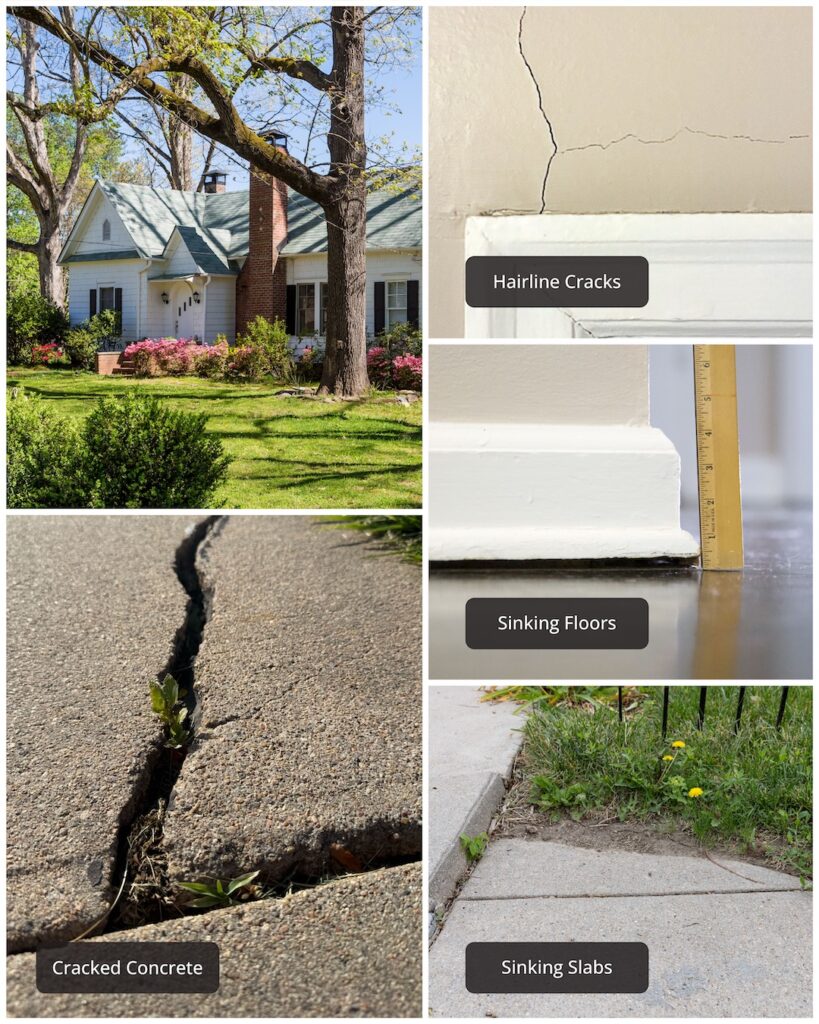
Years ago, our team inspected a home in North Vancouver built on a hillside. The signs of foundation settlement were already evident:
- Uneven floors
- Drywall cracking
- Doors and windows sticking
- Noticeable sloping throughout the home
The homeowners understood the issue and received a repair proposal. However, like many homeowners facing a significant structural repair, they decided to wait.
Their reasoning was understandable.
The house was still standing.
The problem wasn’t causing an emergency.
The repair felt expensive.
So they did nothing.
What Happened Next?
Over the following decade, the settlement continued.
The foundation itself remained structurally sound, but the soils beneath the home continued to compress and move.
By the time the homeowners retired and decided to sell, the warning signs had become much more obvious. Prospective buyers noticed the uneven floors and structural movement immediately.
The home sat on the market significantly longer than expected.
When a buyer was finally found, the foundation concerns became a major negotiating point, resulting in a substantially reduced sale price.
The repair they chose to avoid eventually cost far more than the repair itself.
What We Learned From Thousands of Assessments
At True Level Concrete, we’ve performed foundation inspections on homes throughout Metro Vancouver, the Fraser Valley, Vancouver Island, and the Sea-to-Sky region.
One observation consistently stands out:
Foundation settlement rarely fixes itself.
In our experience, the vast majority of structural settlement cases we inspect are linked to one or more of the following:
- Poorly compacted fill soils
- Organic or compressible soils
- Long-term moisture fluctuations
- Water infiltration and drainage issues
- Slope movement
- Soil consolidation beneath older structures
When these underlying conditions remain unaddressed, the symptoms often become progressively worse over time.
Our Internal Observation: Most Calls Come Late
One trend we’ve noticed from decades of foundation repair consultations is that many homeowners wait until settlement begins affecting everyday life before taking action.
The most common triggers for finally seeking repairs include:
- Doors no longer closing properly
- Large drywall cracks reappearing after patching
- Windows becoming difficult to operate
- Visible floor slope
- Concerns during a home sale
- Insurance, engineering, or real estate recommendations
By the time these issues appear, the structure has often experienced years of movement.
Why Early Intervention Matters
Foundation repair is not simply about fixing cracks.
It’s about addressing the soil conditions that caused the movement in the first place.
When settlement is identified early, repairs can often be more straightforward because:
- Less structural distortion has occurred
- Fewer secondary repairs may be required
- Floors, walls, and finishes have sustained less damage
- Home value impacts can be minimized
Most importantly, homeowners gain certainty that the problem has been addressed rather than wondering if the house will continue moving.
Can a Settled Foundation Be Stabilized?
In many cases, yes.
Modern foundation repair systems such as helical piers, push piers, underpinning systems, and engineered soil stabilization techniques can often transfer structural loads to more suitable bearing layers or improve the performance of the supporting soils.
The appropriate solution depends on the structure, soil conditions, and the cause of movement.
Every home is different.
The Bottom Line
Foundation settlement is one of those problems that homeowners hope will stop on its own.
Unfortunately, soil doesn’t negotiate.
If the underlying cause remains active, the movement often continues.
The homeowners in North Vancouver faced a choice many property owners eventually encounter:
Pay now to address the problem—or pay later when the consequences become more severe.
After thousands of foundation assessments across British Columbia, we’ve learned that the second option is usually the more expensive one.
If you’re seeing cracks, sloping floors, sticking doors, or other signs of settlement, understanding the cause early is often the smartest investment you can make.